

January 21, 2026
Written by: Tiffany Kuku

For many nursing students, new graduate nurses and nurses in transition, the period after graduation or during a career shift can feel incredibly uncertain, difficult and overwhelming. A staggering statistic suggests that about 40% of nurses across Canada leave the profession before reaching age 35. While B.C saw the biggest improvement since 2013 compared to other provinces, it is crucial to continue developing resources to support nurses during these transitions.
That’s why NNPBC is asking for input from early-career nurses and nurses in career transitions on their experiences and needs. NNPBC is committed to shaping pathways for growth, stability, retention and long-term engagement for all nurses, including new ones. Meaningful support, which is unequally applied and often inconsistent across British Columbia for early-career nurses and nurses in career transitions, must be informed by those directly impacted.
A new project is trying to better understand these unique experiences and identify additional ways NNPBC can support nurses during early-career and transitional stages.
About the Research
Megan Dreesmann, a fourth year Bachelor of Nursing student at the University of Victoria, has a strong interest in the experiences of early-career nurses, nurses navigating a career shift and the overall retention in the nursing field.
Megan’s survey was intentionally designed to be inclusive of nurses experiencing different types of career transitions; including nurses considering continuing education or pursuing other graduate studies, transitioning into leadership roles, becoming more involved in research, or moving into new or expanded practice roles.
“I think I bring a unique lens to this project because I am a soon-to-be new graduate nurse myself,” says Megan. “NNPBC has already identified their want to support nurses in career transitions, and I am hoping to influence the development of these supports in a meaningful way. I believe that with a lot of engagement in this survey, it could really support the nurses of B.C. and show that this is a topic that is important to members.”
As part of a quality improvement project, her project aims to better understand the realities faced by both early-career nurses and nurses in career transitions, with the goal of informing more effective and responsive support strategies.
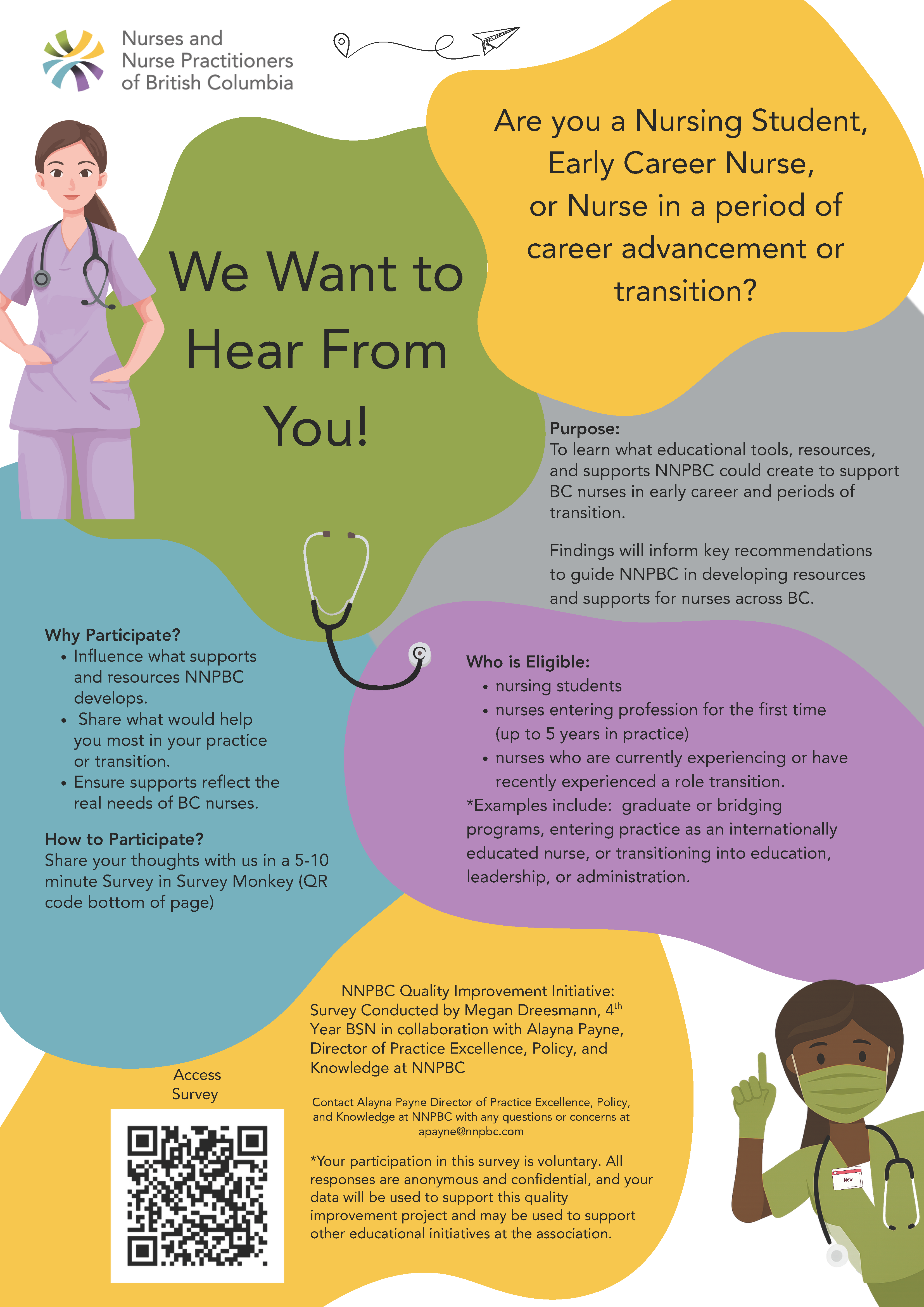
Invitation to Participate
If you are currently a nursing student, an early graduate, or a nurse currently experiencing a role transition, your experience is valuable. We invite you to share your experiences in a short survey. The survey will remain open until Friday, February 13.
By participating in this survey, you will help identify common challenges faced during the transitional period, highlight gaps in existing support systems and inform future intentionally curated programs, services and resources aimed at resolving this challenge for nurses across BC.
Thank you for taking the time to help us develop meaningful resources that remain relevant, timely and effective for nurses at all stages in their career.
References
Association of Registered Nurses of British Columbia. (2017, August). New Graduate Nurse Retention, Integration, Support & Education: Policy Directions for ARNBC. https://www.nnpbc.com/webarnbc/pdfs/policies-and-advocacy/advisory-councils/NPAC/ARNBC-NPAC-New-Grad-Transition.pdf
Montreal Economic Institute. (2024, September). Which provinces struggle the most to keep young nurses? https://www.iedm.org/wp-content/uploads/2024/09/note102024_en.pdf
PubMed Central. (2023, July 17). The Experiences of Newly Graduated Nurses during Their First Year of Practice. https://doi.org/10.3390/healthcare11142048